

In line with best practice Notifier recommends that both the audible and visual elements of an alarm device should comply with the relevant BS EN54 standards. Notifier has a range of sounders, VIDs and VADs compliant to BS EN54-3 and BS EN54-23 to meet individual requirements within the building Fire Risk Assessment.
Audible Alarm Signals
Sounder Volume
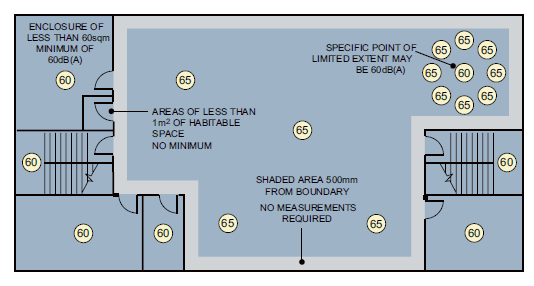
The general requirement for the volume of audible alarm signals is that they should provide a Sound Pressure LeveI (SPL) of at least 65dB(A), but not more than 120dB(A) throughout all accessible areas of a building.
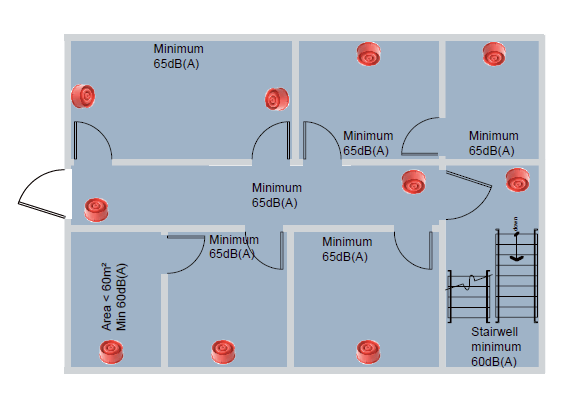
- In stairways the SPL may be reduced to 60dB(A)
- Enclosures less than 60m₂ may be reduced to 60dB(A)
- There is no minimum for enclosed areas less than 1m₂
- At specific points of limlted extent the SPL may be reduced to 60dB(A)
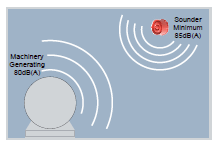
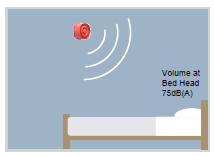
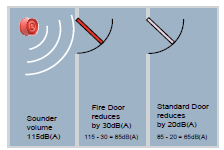
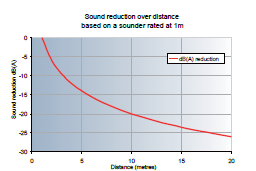
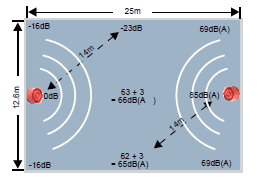
This is to prevent points of excessive volume, which may lead to disorientation or damage hearing. 2 sounders providing equal sound levels will combine to add 3dB(A) to the SPL.
It is essential that at least one sounder is placed within each fire compartment and the sounder choice should be common throughout the building.
You should not mix bells and electronic sounders within the same building.
Warning: Volumes greater than 120dB(A) will cause damage to hearing.
Visual Alarm Devices
In the event of a fire alarm being activated Visual Alarm Devices (VADs) complying to EN54-23 are only required if they are considered to be the primary source of evacuation to building occupants as defined within the building’s fire risk assessment.
If sounders are considered as the primary source of evacuation these should comply to EN54-3 and light may be used to provide supplementary indication.
However, in line with best practice, it is recommended that both the audible and visual elements of an alarm device should comply with the relevant EN54 standards.
Regulations for Visual Alarm Devices
EN54-23
EN54 is a collection of product standards that controls the design and manufacture of the components of a fire detection and alarm system.
EN54 Part 23 is the section that refers to VADs. It provides a means of ensuring VADs from any manufacturer meet consistent minimum standards of performance ensuring systems are designed, installed and perform as intended.
All beacons used as a primary method of notification must have the capability to alert all members of society to an evacuation induding the hearing impaired.
BS5839-1
Code of Practice for design and installation of fire detection and alarm systems. This recommends that VADs should comply with EN54 Part 23.
CPR – Construction Products Regulation
EU regulation that ensures building products are safe and are compatible with other systems in the building.
This requires that VADs are certified to EN54 Part 23 and covered by a declaration of performance (DoP) issued by the manufacturer.
LPCB Code of Practice CoP0001
Where a strobe or beacon Is considered to be the primary source of evacuation as defined in the fire risk assessment it is important to choose a product capable of delivering the required light output.
The LPCB Code of Practice (CoP001) provides design guidance for visual alarm devices used for fire warning. Some of the elements which need to be considered to deliver a compliant solution are detailed below:
- Level of ambient light
- Required field of view (direct or Indirect viewing)
- Refiectivlty of surfares
- Effect of colour
- Tinted Eye Protection (white would be more effective)
- Usage and occupation
- Environmental conditions